Cleaning keeps a pool looking good this week. Maintenance keeps it working for the next fifteen years. An in-ground pool is a $60,000+ asset with a pump, filter, heater, and plumbing that all fail early when water chemistry is neglected — and all last far longer when it isn't.
Our local service partner's maintenance programs cover the unglamorous work that actually protects your pool: correct chemistry week after week, filters cleaned before pressure climbs, salt cells inspected and descaled, o-rings lubricated, and small failures caught while they're still small.
Water chemistry: the core of pool maintenance
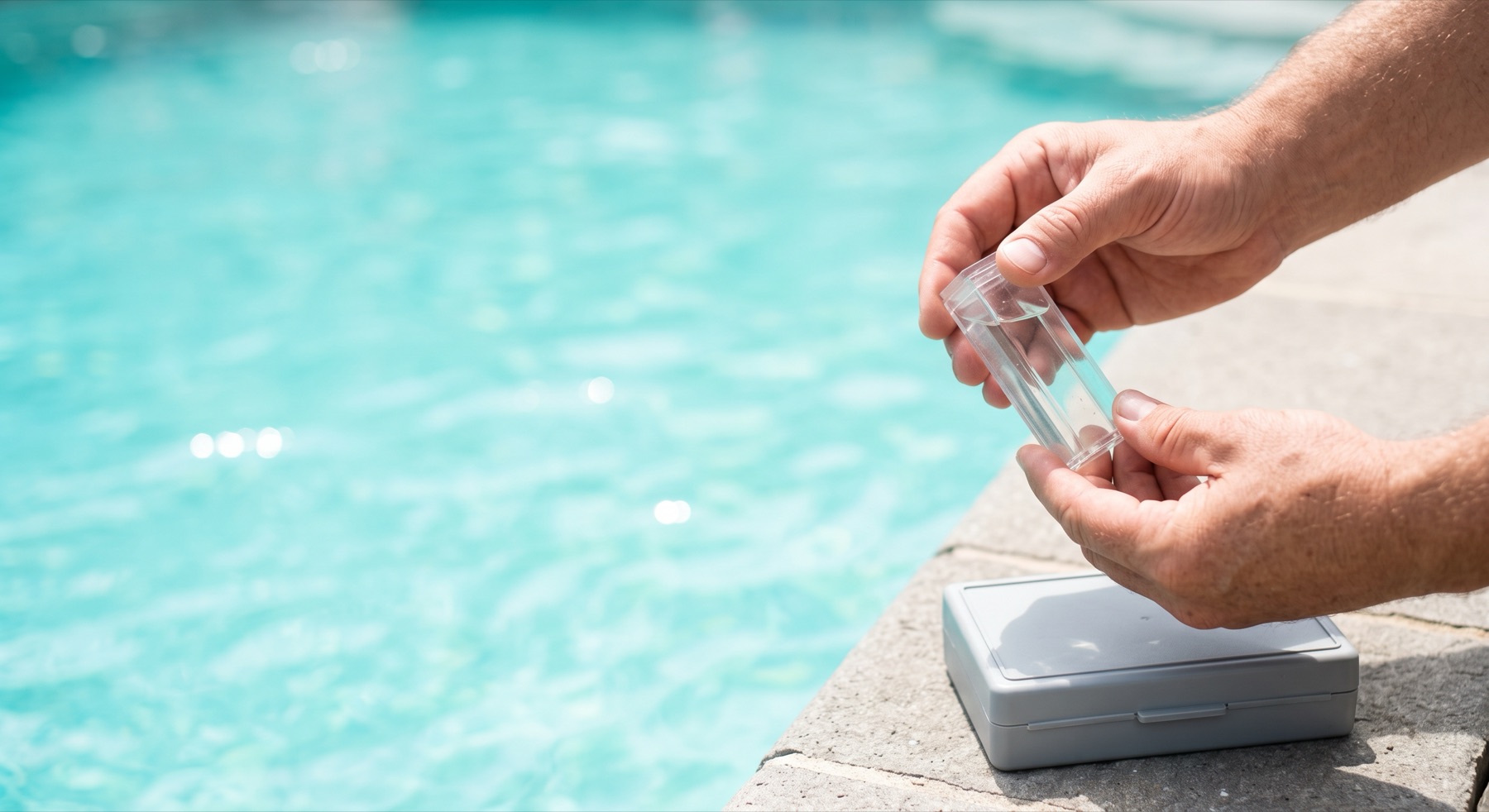
Nearly every expensive pool problem traces back to water chemistry. Low pH quietly corrodes heat exchangers and etches plaster. High pH and high calcium scale surfaces and cloud water. Low stabilizer burns off chlorine in hours of summer sun; high stabilizer locks chlorine up so it stops sanitizing. Proper maintenance keeps every parameter in range:
- Free chlorine: 1–3 ppm (3–5 ppm for salt pools' target range varies by system)
- pH: 7.4–7.6
- Total alkalinity: 80–120 ppm
- Calcium hardness: 200–400 ppm
- Cyanuric acid (stabilizer): 30–50 ppm
Equipment care that prevents mid-season failures
The worst time to discover a dying pump is the first week of July, when every pool company in the city is booked. Preventive maintenance visits inspect pump seals and baskets, check filter pressure and clean cartridges or backwash sand and DE filters on schedule, verify heater operation before you need it, test salt chlorine generators, and keep automation doing what it claims to be doing.
For salt pools — increasingly common in newer Cincinnati subdivisions — cell inspection matters twice a season at minimum. A scaled cell quietly produces less chlorine until the pool tips green, and running a heavily scaled cell shortens its expensive life.
Maintenance plans that fit how you use your pool
Full-service weekly maintenance is the most popular option, but it isn't the only one. Chemical-only plans, every-other-week service for low-use pools, vacation coverage while you travel, and one-time tune-up visits are all available. Tell us how you use your pool and you'll get a recommendation that fits — not an upsell.
Pool Maintenance: common questions
What's the difference between pool cleaning and pool maintenance?
Cleaning is the visible work — skimming, vacuuming, brushing. Maintenance adds water chemistry management and preventive equipment care: filter cleaning, salt cell care, seal and o-ring checks, and seasonal equipment tasks. Weekly full-service plans include both.
How often should a pool filter be cleaned?
Cartridge filters generally need cleaning when pressure rises 8–10 PSI over clean baseline — typically every 4–8 weeks in season here. Sand and DE filters are backwashed on a similar pressure rule, and DE filters should be fully broken down and cleaned at least once a season.
Do salt water pools need maintenance?
Yes. Salt pools generate their own chlorine but still need pH, alkalinity, stabilizer, and salt levels managed — salt systems naturally drive pH upward — plus regular salt cell inspection and descaling.
Can you maintain a pool with older equipment?
Almost always. A good technician can keep older single-speed pumps and legacy filters running, and will tell you honestly when a repair stops making sense compared to replacement.