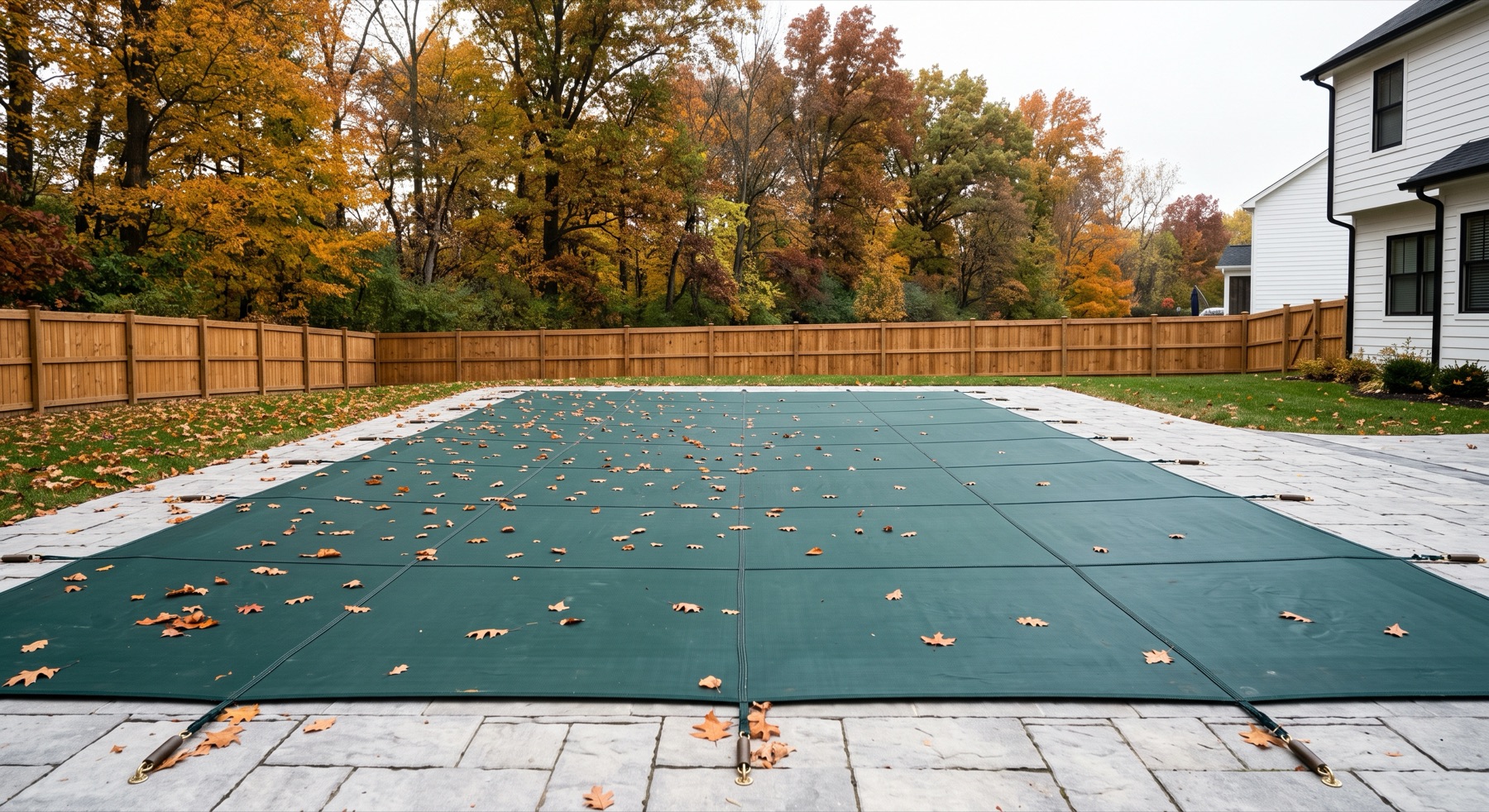
In southwest Ohio, pool closing isn't optional maintenance — it's freeze protection for buried plumbing that costs thousands to excavate and repair. Cincinnati winters reliably deliver hard freezes, and a single missed return line with water left in it can split underground, where you won't find the damage until your newly opened pool won't hold water in May.
A professional closing puts the pool to bed correctly: water chemistry balanced for the off-season, lines blown out with compressed air and sealed, every piece of equipment drained, and a cover installed tight enough to survive an Ohio winter of leaves, snow load, and wind.
What a professional closing includes
The full winterization checklist:
- Balance water chemistry and add winterizing chemicals and algaecide
- Lower water to the correct level for your pool and cover type
- Blow out skimmer, return, and main drain lines with compressed air
- Plug lines and add pool antifreeze where appropriate
- Drain pump, filter, heater, chlorinator, and salt cell
- Remove and store ladders, rails, and baskets
- Install and secure the winter or safety cover
When to close a pool in Cincinnati
The sweet spot is late September through late October — after the water drops below about 65°F (so algae is dormant under the cover) but comfortably before the first hard freeze, which in the Cincinnati area typically arrives in early-to-mid November.
Closing too early, while the water is still warm, invites algae growth under the cover all fall. Closing too late gambles your plumbing against the first cold snap. Watching water temperature — not the calendar — is the professional approach.
Why DIY closings go wrong
The most expensive closing mistakes are invisible in October: a return line that wasn't fully blown out, a heater with water left in the exchanger, a main drain that wasn't air-locked. Everything looks fine under the cover — until spring reveals a cracked pipe, split heat exchanger, or a leak somewhere under the deck. Professional closings exist because compressed-air line blowouts done correctly are the whole ballgame, and doing them correctly takes the right equipment and experience with your specific plumbing layout.
Pool Closing & Winterization: common questions
When should I close my pool in Cincinnati?
Late September through late October for most pools — once water temperature falls below about 65°F but well before the first hard freeze, typically early-to-mid November here.
How much does pool closing cost in Cincinnati?
Most closings in the area run about $250–$450 depending on pool size, equipment, and cover type. Safety-cover installs and pools with spas or water features are toward the upper end.
Do I really need to blow out the lines?
In this climate, yes. Cincinnati regularly sees extended stretches below freezing. Water left in buried lines expands as it freezes and can split PVC underground — the repair means excavation, and it costs many times what a closing does.
Should I drain my pool for winter?
No — never fully drain an in-ground pool. Water is lowered a few inches below the correct point for your cover type, but the pool stays filled to counter groundwater pressure that can lift or crack an empty shell.